
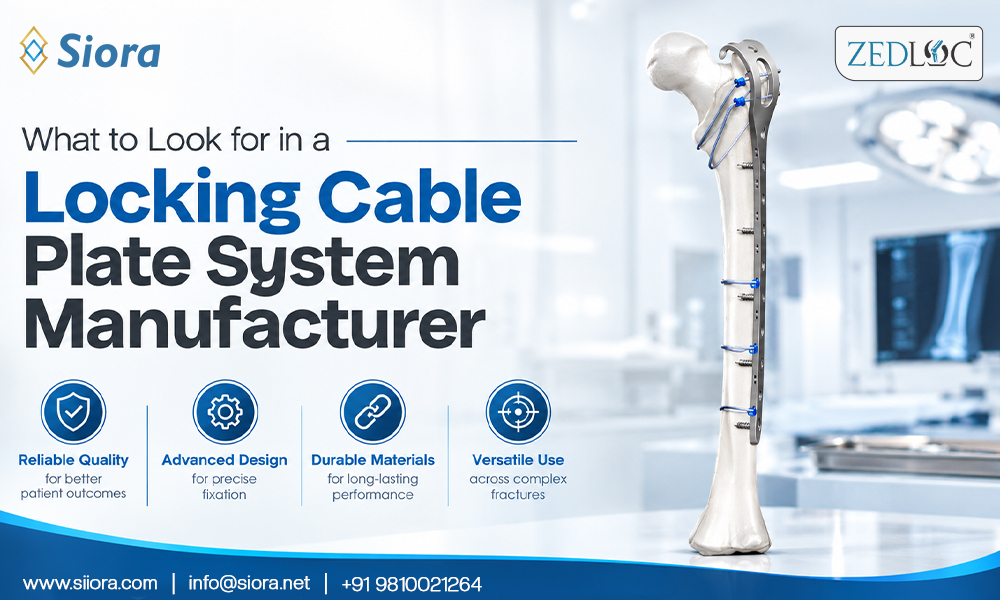
Choosing a locking cable plate system manufacturer is a vital decision for hospitals, surgeons, and medical device companies. These systems are used in fracture fixation, particularly in cases where conventional plating alone may not provide the required support. The quality of the implant, the reliability of the manufacturing process, and the availability of suitable instruments all influence a buyer’s decision.
However, not every manufacturer offers the same level of product consistency, technical expertise, or customer support. Before finalizing a manufacturing partner, it is important to check the credibility and other important factors.
1. Evaluate Product Quality and Material Selection
The first thing to examine is the quality of the locking cable plate system itself. Orthopedic implants must be manufactured with precision because even small variations in dimensions or surface finish can affect product performance.
Ask the manufacturer about the materials used for plates, screws, and cables. Stainless steel and titanium alloys are commonly used in orthopedic implant manufacturing, although their suitability depends on the intended application and product design. Material specifications, traceability, and documented quality checks should be available for verification.
2. Look for Strong Manufacturing Capabilities
A reliable manufacturer must have necessary documentation and sources that ensure consistent quality across batches. Modern CNC machining, appropriate finishing equipment, and validated cleaning processes can contribute to accurate and repeatable manufacturing.
Ask how the company manages raw materials, production tolerances, in-process inspections, and final product release. A well-defined quality control process helps identify defects before products reach distributors or healthcare facilities.
Manufacturing capability also matters when you require different plate configurations, cable lengths, screw options, or instrument sets. A supplier with suitable engineering expertise may be better equipped to accommodate legitimate product requirements without compromising established specifications.
3. Verify Regulatory Compliance and Quality Certifications
Regulatory compliance is a major consideration when sourcing orthopedic implants. A manufacturer must clearly explain the quality management systems it follows, along with the supporting documentation.
For example, ISO 13485 is an important quality management standard for medical devices. Depending on the product and target market, additional requirements may apply. These could include market-specific registrations, conformity assessments, technical documentation, and applicable biocompatibility evaluations.
Do not rely on certification logos alone. Verify the certificate’s validity, scope, issuing body, and relevance to the manufacturing facility and product category. Buyers should also confirm that the locking cable plate system meets the regulatory requirements of the country where it will be distributed.
4. Examine Product Range and Technical Support
A manufacturer offering a broader orthopedic implant portfolio may be a practical choice for distributors seeking to consolidate their sourcing. However, product range should never replace a proper assessment of quality.
Check whether the supplier provides compatible screws, cables, and required surgical instruments for the intended system. Clear product catalogues, accurate specifications, and appropriate technical documentation can simplify product evaluation and inventory planning.
Responsive communication is equally important. A dependable manufacturer should address questions about product availability, ordering requirements, packaging, and technical documentation promptly.
5. Consider Supply Reliability and Delivery Timelines
Even a well-made implant can become difficult to source if deliveries are inconsistent. Before finalizing a supplier, discuss production capacity, standard lead times, minimum order quantities, and procedures for handling urgent requirements.
Export-oriented buyers should also assess packaging, shipping documentation, and the manufacturer’s experience with their destination market. Reliable communication about delays or changes in availability can help distributors plan inventory more effectively.
6. Compare Pricing Without Overlooking Value
Competitive pricing matters, particularly for distributors managing multiple product categories. Still, choosing a manufacturer solely because it offers the lowest quotation can create problems if product consistency, documentation, or after-sales support falls short.
Compare quotations alongside material specifications, quality controls, packaging, instrument availability, and delivery commitments. The objective is to establish a commercially sustainable relationship without making unnecessary compromises on product quality.
Final Thoughts
Finding the right locking cable plate system manufacturer requires more than comparing catalogues and prices. Product quality, manufacturing capabilities, regulatory compliance, technical support, and supply reliability all deserve careful attention.
A thorough evaluation helps orthopedic distributors and medical device businesses make informed sourcing decisions and develop long-term supplier relationships. By verifying claims, reviewing documentation, and discussing requirements before placing an order, buyers can select an orthopedic implant manufacturing partner whose capabilities align with their business needs and applicable regulatory obligations.

