
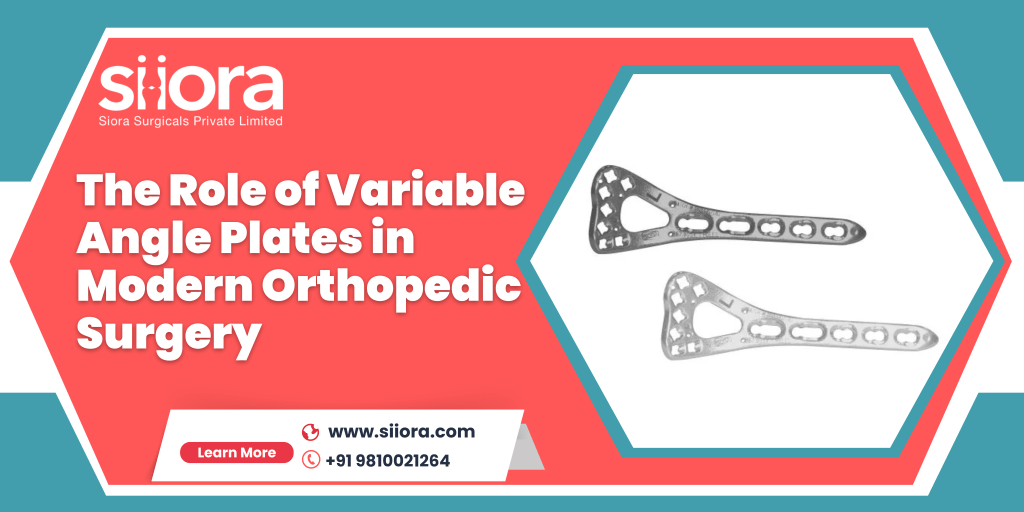
Orthopedic surgery has witnessed significant advancements over the years, with innovations that improve patient outcomes and simplify procedures for surgeons. Among these advancements, variable angle plates have emerged as a vital tool in the treatment of complex fractures. These devices, known for their flexibility and precision, have revolutionized the way orthopedic surgeons approach bone repair and stabilization.
What Are Variable Angle Plates?
Variable angle plates are specialized implants designed to stabilize fractures by allowing screws to be inserted at various angles. Unlike traditional fixed-angle plates, which restrict screw placement to predetermined positions, variable angle plates offer greater flexibility. This feature is particularly useful in managing fractures in anatomically challenging locations, such as near joints or irregularly shaped bones.
These plates are typically made of biocompatible materials such as titanium or stainless steel. Their design includes threaded holes that permit screws to be locked in at different angles, ensuring a secure fit while accommodating individual patient anatomy. This adaptability makes them a preferred choice for surgeons dealing with intricate fractures.
What Are the Applications in Orthopedic Surgery?
Variable angle plates are widely used in various types of orthopedic surgeries, particularly in trauma and reconstructive procedures. Here are some of their key applications:
Complex Fractures
Fractures involving areas like the distal radius, proximal humerus, or tibial plateau often require precise stabilization. Variable angle plates enable surgeons to optimize screw placement based on the fracture’s complexity and the bone’s geometry.
Osteoporotic Bones
In elderly patients with osteoporosis, bone quality is often poor, making stable fixation a challenge. Variable angle plates allow for more secure screw positioning, reducing the risk of loosening or failure.
Periarticular Fractures
Fractures near joints demand meticulous care to avoid compromising joint function. Variable angle plates help achieve stable fixation without interfering with adjacent structures, preserving joint mobility.
Pediatric Orthopedics
In children, the growing skeleton poses unique challenges. The adjustable nature of variable angle plates ensures that fixation can adapt to the bone’s ongoing development.
What Are the Advantages of Variable Angle Plates Over Traditional Fixed-Angle Plates?
The versatility of locking variable angle plates offers several advantages over traditional fixed-angle plates:
Improved Fit
The ability to insert screws at different angles ensures a better fit, even in bones with irregular shapes or compromised density.
Enhanced Stability
Locking screws at variable angles enhances the stability of the construct, reducing the likelihood of hardware failure.
Reduced Need for Bone Grafting
The adaptability of these plates often eliminates the need for extensive bone grafting, as surgeons can tailor the fixation to the patient’s anatomy.
Minimized Soft Tissue Damage
With greater control over screw trajectories, surgeons can avoid damage to nearby soft tissues, nerves, and blood vessels.
What Are the Challenges and Limitations Associated with these Variable Angle Plates?
While variable angle plates offer numerous benefits, they are not without challenges. These include:
Higher Cost
The advanced technology and materials used in variable angle plates make them more expensive than traditional options. This can limit their accessibility in some healthcare settings.
Learning Curve
Surgeons require additional training to fully utilize the potential of variable angle plates. Improper use may compromise outcomes.
Surgical Time
In some cases, the increased customization may lead to longer surgical times, especially for less experienced surgeons.
The Future of Variable Angle Plates
Ongoing research and development aim to further enhance the functionality of variable angle locking plates. Advances in materials, such as bioresorbable polymers, may improve biocompatibility and reduce the need for hardware removal surgeries. Additionally, the integration of technologies like 3D printing and computer-assisted surgery could make these plates even more patient-specific and efficient.
The adoption of these plates is expected to grow as their benefits become more widely recognized. By improving outcomes and enabling more precise surgical techniques, variable angle plates are set to play a central role in the future of orthopedic care.
Conclusion
Variable angle plates represent a significant leap forward in orthopedic surgery. Their adaptability, precision, and ability to address complex fractures make them an invaluable tool for modern surgeons. While challenges remain, ongoing advancements promise to make this technology even more effective and accessible. As the field of orthopedics continues to evolve, locking variable angle plates will undoubtedly remain at the forefront, transforming the way fractures are managed and enhancing the quality of life for countless patients.If you are looking to be an orthopedic distributor in Ghana, find the top orthopedic medical device companies in Ghana.
 Siora Surgicals Pvt. Ltd.