
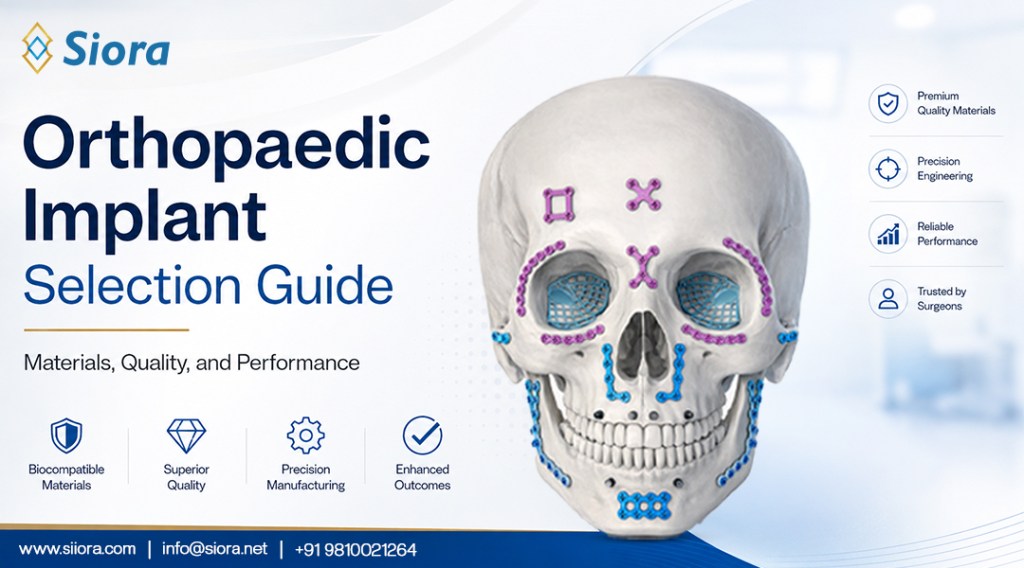
Choosing an orthopaedic implant is not simply about selecting a plate, screw, nail, or other fixation device. The right implant can influence surgical efficiency, stability at the fracture site, patient recovery, and long-term clinical outcomes. With a wide range of materials, designs, and manufacturing standards available today, healthcare professionals and distributors need to understand what separates a reliable orthopaedic implant from an ordinary one.
This guide explores the key factors to consider when evaluating orthopaedic implants, with particular attention to materials, manufacturing quality, and overall performance.
Understanding the Role of Implant Materials
The material used in an orthopaedic implant plays a major role in its strength, biocompatibility, corrosion resistance, and long-term performance inside the body. Two of the most commonly used materials are stainless steel and titanium alloys.
Stainless Steel
Medical-grade stainless steel has been widely used for trauma implants because of its strength, durability, and cost-effectiveness. It is commonly used in bone plates, screws, and intramedullary nails.
Key advantages include:
- High mechanical strength
- Good resistance to wear and corrosion
- Cost-effective manufacturing
- Suitable for a broad range of trauma applications
However, the grade and quality of stainless steel must be carefully evaluated. Proper material composition and controlled manufacturing are essential to ensure consistent implant performance.
Titanium and Titanium Alloys
Titanium implants are known for their excellent biocompatibility and resistance to corrosion. Titanium and alloys such as Ti-6Al-4V are often preferred where reduced weight, strength, and biological compatibility are important.
Their benefits include:
- High strength-to-weight ratio
- Excellent corrosion resistance
- Good biocompatibility
- Reduced implant weight
Titanium is widely used in trauma, spine, maxillofacial, and other advanced orthopaedic applications.
Quality Starts with Manufacturing Precision
Even the best raw material cannot compensate for poor manufacturing. Orthopaedic implants require precise machining, controlled dimensions, smooth finishing, and consistent thread profiles.
For example, a locking plate must work accurately with its corresponding screws, while an interlocking nail must allow precise placement of locking bolts. Small deviations in dimensions can affect implant compatibility and surgical handling.
A reliable manufacturer should follow established quality management systems and maintain strict control throughout production, from raw material inspection to final packaging.
Important Quality Factors to Evaluate
When assessing an orthopaedic implant, consider more than its appearance. Important factors include:
Material Traceability
Manufacturers should maintain records showing the source, grade, and specifications of the materials used. Traceability supports consistency and accountability.
Dimensional Accuracy
Accurate implant dimensions are essential for proper fit and compatibility with surgical instruments and associated components.
Surface Finish
A well-controlled surface finish helps reduce irregularities and supports the overall quality of the implant. Finishing processes should be consistent across production batches.
Sterility and Packaging
Packaging plays an important role in protecting the implant before use. Depending on the product and market requirements, implants may be supplied sterile or non-sterile, with appropriate labeling and packaging controls.
Performance Depends on More Than Strength
A common mistake is to judge an implant only by how strong it appears. Orthopaedic implant performance depends on several factors working together, including implant design, material properties, fixation stability, fatigue resistance, and compatibility with the surgical technique.
For instance, a locking plate designed for complex fractures may require anatomical contouring and multiple screw options. Similarly, an intramedullary nail must provide stable fixation while supporting appropriate load distribution during the healing process.
The most suitable implant is therefore the one designed for the specific clinical application rather than simply the strongest available option.
The Importance of Standards and Certification
Quality standards provide additional confidence when selecting an implant supplier. Manufacturers operating under recognized quality systems, such as ISO 13485, demonstrate a structured approach to medical device design, manufacturing, documentation, and quality control.
Other factors, including regulatory approvals, risk management processes, biocompatibility testing, and market-specific compliance, should also be considered when evaluating an orthopaedic implant portfolio.
Conclusion
Selecting the right orthopaedic implant requires a balanced evaluation of material, manufacturing quality, design, and expected clinical performance. Stainless steel and titanium both offer important advantages, but the final choice should depend on the intended application and product requirements.
Healthcare providers and distributors should work with orthopaedic manufacturers that emphasize material traceability, precision manufacturing, quality management, and reliable product performance. A carefully selected implant portfolio can support better surgical outcomes while also ensuring consistency, safety, and confidence throughout the supply chain.

