
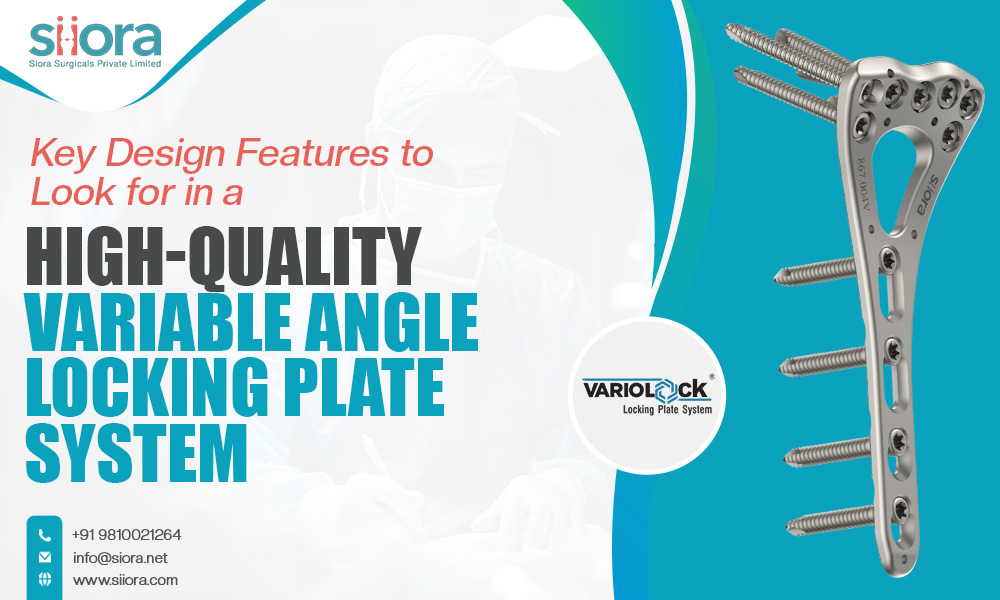
So, we know that variable angle locking plates are a huge leap forward in fixing broken bones. They give surgeons the strength of a locked plate plus the freedom to aim the screws—a true best-of-both-worlds scenario. But here’s the thing: not all systems are created equal. Just like with cars or power tools, there are basic models and then there are high-performance machines. When surgeons and hospitals are choosing a system, they’re looking at the nitty-gritty design details that separate the good from the truly great.
Design Features in the Variable Angle Locking Plate System
Feature #1: The Locking Mechanism Itself
This is the heart of the whole system. How does the screw actually lock into the plate? It’s the “handshake” between the two components, and it needs to be rock-solid.
A high-quality system has a locking mechanism that is both incredibly strong and intuitive for the surgeon. The threads on the screw head and in the plate hole should engage smoothly and securely. When the surgeon gives that final turn, they should feel a confident, tactile feedback—a solid “thump” that tells them the screw is securely locked and isn’t going anywhere. A weak or mushy-feeling lock is a red flag. The goal is a rigid construct that completely eliminates the risk of screws backing out over time.
Feature #2: The Sweet Spot of Angulation
The “variable angle” part is key, but more isn’t always better. The “cone of angulation” is the amount of wiggle room the surgeon has to aim the screw. Most top-tier systems offer a range of about 15 degrees in any direction. This seems to be the sweet spot. It’s enough freedom to navigate around fracture lines and “chase” the best-quality bone, but not so much that it compromises the overall strength of the lock. A system with too little angulation is restrictive, while one with too much can sometimes lead to a weaker connection at extreme angles.
Feature #3: Truly Anatomical Plate Design
The best screws in the world won’t help if the plate itself doesn’t fit the bone. A top-tier system features plates that are meticulously pre-contoured. They aren’t just bent metal; they’re designed using 3D data from thousands of real bones to perfectly match the subtle curves and twists of the specific anatomy, whether it’s a clavicle, a wrist, or an ankle.
On top of that, the plate should be low-profile. It needs to be incredibly strong but also as thin as possible. Why? Because these plates often sit right under the skin. A bulky plate can irritate tendons and be a constant annoyance for the patient. A sleek, low-profile design that hugs the bone means a more comfortable recovery and a much lower chance that the patient will need a second surgery just to get the hardware taken out.
Feature #4: The Instruments Can’t Be an Afterthought
A surgeon is a craftsperson, and they are only as good as their tools. A high-quality plate system comes with a toolkit that is just as well-engineered as the implants themselves. The instruments should be ergonomic and intuitive.
This means screwdrivers that feel balanced in the hand. It means drill guides that are simple to use and allow the surgeon to set the desired angle with confidence. It means everything is clearly labeled and organized. A clunky, poorly designed instrument set can add time and frustration to a surgery. A smart, streamlined toolkit makes the entire procedure smoother, faster, and more accurate—which is safer for the patient.
The Bottom Line
When evaluating a variable angle locking system, you have to look at the whole package. It’s the synergy of a strong lock, a useful range of motion, a truly anatomical plate, and well-designed trauma instruments that makes a system stand out. These details are what give a surgeon the confidence to tackle even the most complex fractures and give the patient the best possible shot at a solid, lasting repair.
 Siora Surgicals Pvt. Ltd.