Why Humeral Nailing Is Gaining Attention
Fractures of the humerus can present surgeons with very different challenges depending on the location, fracture pattern, bone quality, and patient condition. While plating remains an important fixation option, intramedullary nailing has become a valuable part of the treatment landscape, particularly for selected shaft and proximal humeral fractures.
This growing clinical application is creating an interesting opportunity for orthopaedic implant suppliers. Hospitals and distributors are increasingly looking beyond individual implants and seeking dependable fixation systems that combine implant quality, compatible instrumentation, and consistent supply.
For suppliers, the humeral nail segment therefore represents more than another product category. It can become an important addition to a broader trauma portfolio.
What Makes Humeral Nail Systems Different?
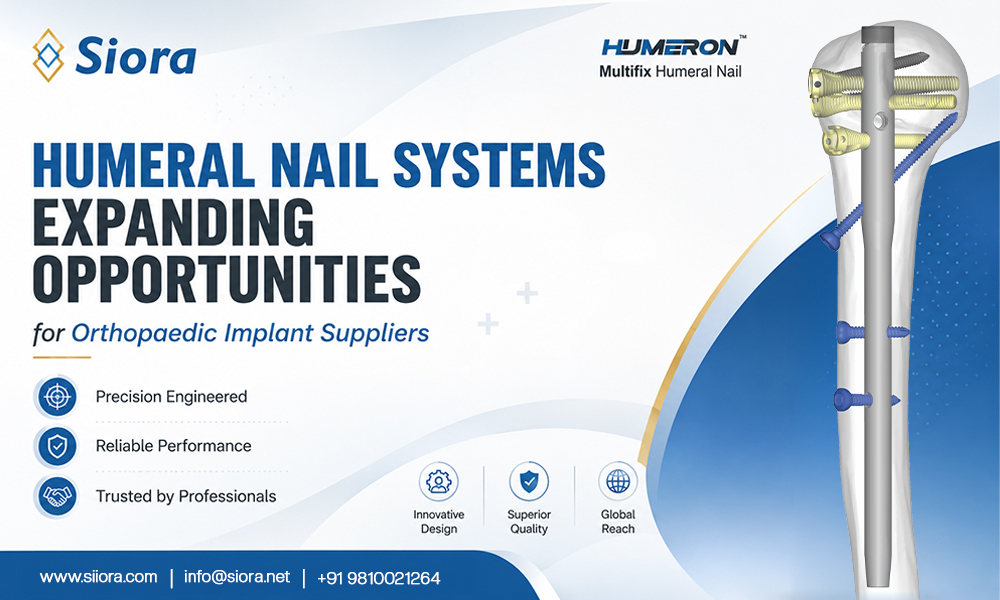
A humeral nail is inserted within the medullary canal of the upper-arm bone, allowing fracture stabilization from inside the bone. Depending on the design, nails may offer different locking configurations to address the anatomical and biomechanical requirements of particular fracture patterns.
Modern systems are designed with attention to factors such as nail diameter, length, locking options, insertion technique, and anatomical considerations. The accompanying instruments are equally important. Targeting guides, insertion handles, drill sleeves, depth gauges, and other dedicated tools can make a complete system more practical for surgical use.
For implant suppliers, this means that offering a humeral nail alone may not be enough. A well-designed system supported by compatible instrumentation can provide greater value to distributors and healthcare facilities.
Opportunities for Orthopaedic Implant Suppliers
Expanding the Trauma Product Portfolio
Suppliers already dealing in trauma implants can add humeral nails alongside femoral and tibial nailing systems, plates, and screws. This creates a more comprehensive portfolio for distributors who prefer working with manufacturers capable of meeting multiple fixation requirements.
Meeting Different Surgical Requirements
One of the strengths of a dedicated humeral nailing system is its ability to address different fracture situations through appropriate nail sizes and locking configurations. Offering a thoughtfully developed range allows suppliers to serve a wider group of hospitals and surgeons.
Building Distributor Relationships
A broader trauma portfolio can also strengthen relationships with regional distributors. Instead of approaching customers with a single implant, suppliers can provide a complete range of fixation solutions, backed by product documentation, instrumentation, technical support, and dependable logistics.
Quality Remains a Key Differentiator
The opportunity in humeral nailing should not be viewed purely from a sales perspective. Orthopaedic implants are used in demanding clinical environments, so material selection, manufacturing consistency, dimensional accuracy, surface finish, packaging, and quality control all matter.
For distributors evaluating manufacturers, regulatory compliance and documented quality systems are equally important. A supplier that can demonstrate consistent manufacturing practices and provide appropriate technical documentation is better positioned to build long-term international partnerships.
Looking Ahead
As trauma care continues to evolve, humeral nail systems are likely to remain an important option within modern fracture fixation. For orthopaedic implant suppliers, the segment offers an opportunity to strengthen trauma portfolios, support distributor growth, and respond to changing market requirements.
The strongest opportunity, however, lies in treating the humeral nail as part of a complete fixation system rather than as an isolated implant. Manufacturers and suppliers that combine reliable implants, practical instrumentation, consistent quality, regulatory readiness, and responsive distribution support can build stronger and more sustainable positions in the orthopaedic trauma market.

